Between endless Zoom lectures, TikTok breaks, and perpetual notification pings, the modern student experience resembles a digital hamster wheel spinning faster each semester. Attention spans fragment into ever-smaller chunks. Achievement becomes synonymous with grades that vanish from memory weeks after finals. The tangible world—where things are made, fixed, and genuinely mastered—feels increasingly distant.
Yet a counterintuitive movement is emerging among students seeking something their screens cannot provide. Platforms like Objectif Horlogerie offer access to watchmaking workshops where microscopic gears and centuries-old craft techniques create unexpected transformations. These aren’t recreational diversions or resume padding. They represent a fundamental rewiring of how students relate to time, value, and their own capabilities.
The journey from digital frenzy to tangible mastery reveals something remarkable: slowing down doesn’t make you less productive—it reconstructs the very foundation of focus, identity, and conscious creation that the digital age erodes.
Watchmaking Workshops: Essential Student Insights
- Manual precision work rebuilds attention spans fragmented by digital multitasking, leveraging neuroplasticity to restore sustained focus capabilities
- Creating tangible objects shifts student identity from credential accumulation to maker mastery, offering lasting achievements beyond ephemeral grades
- Accessing haute horlogerie craftsmanship democratizes excellence, permanently recalibrating quality standards and professional aspirations
- Analog skills become rare currency in AI-saturated job markets, providing differentiation impossible to replicate through digital competencies alone
The Counterintuitive Power of Intentional Slowness
Academic culture worships speed. Read faster, write faster, cram more information into shrinking timeframes. Productivity apps promise to optimize every minute. Yet this velocity comes at a neurological cost rarely discussed in campus career centers.
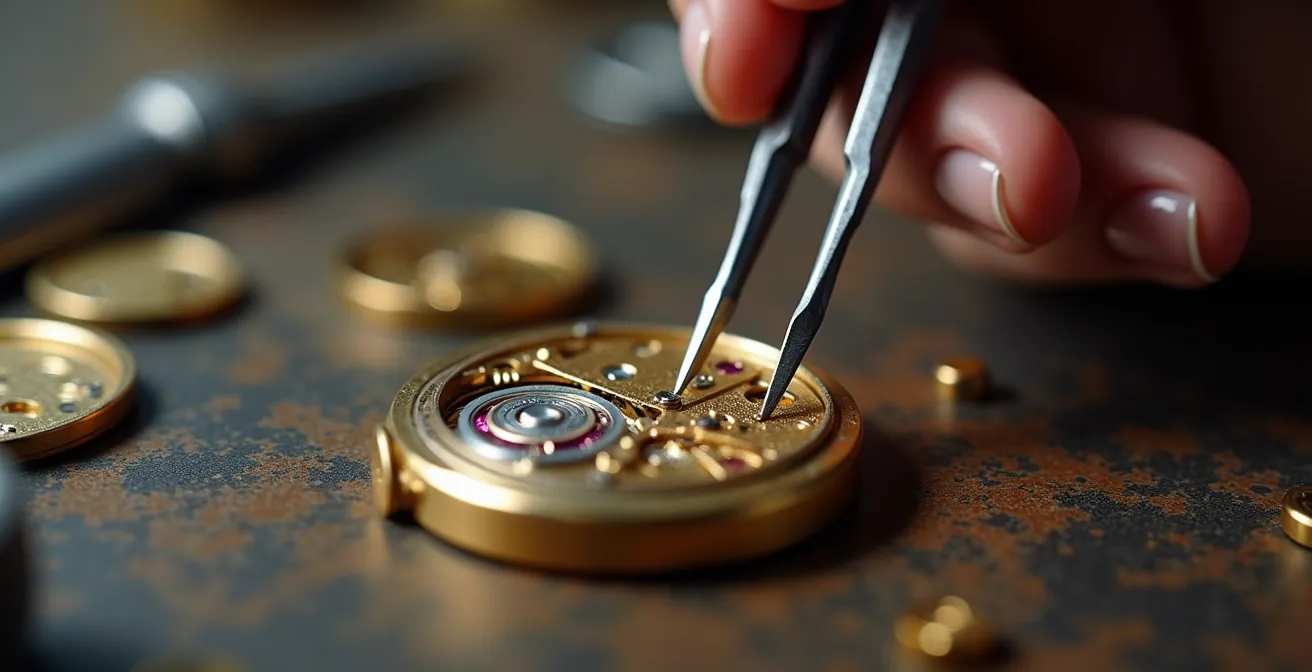
Watchmaking demands the opposite. Assembling a mechanical movement requires sustained attention measured in uninterrupted hours, not fragmented minutes. Components smaller than grains of rice must be positioned with sub-millimeter precision. A single notification ping mid-assembly can destroy hours of meticulous work. The workshop enforces what digital life eliminates: singular, undivided focus.
This enforced slowness triggers neuroplastic changes. The brain, forced to resist distraction, begins rebuilding neural pathways that govern sustained attention. What initially feels excruciating—three hours without checking your phone—gradually becomes achievable, then natural. Students report this rebuilt focus transferring to study sessions, transforming their relationship with deep work.
How Manual Craft Training Rebuilds Attention Spans in Digital Natives
Research reveals a sobering reality: the average adult attention span has dropped to just 8.25 seconds. Yet neuroplasticity offers hope. The brain’s ability to reorganize and form new neural pathways means focus can be rebuilt through repeated focus exercises that strengthen mental stamina. Watchmaking provides precisely this training—forcing sustained attention on microscopic tasks that cannot be rushed or multitasked.
The productivity paradox becomes clear when examining cognitive outcomes. Data comparing activity types reveals striking differences in how students process and retain information across digital versus analog contexts.
| Activity Type | Average Focus Duration | Cognitive Load | Long-term Retention |
|---|---|---|---|
| Digital Multitasking | 47 seconds | High (fragmented) | 20-30% |
| Precision Manual Work | 25-45 minutes | High (sustained) | 70-85% |
| Traditional Study | 10-15 minutes | Medium | 40-50% |
The implications challenge conventional student productivity wisdom. Three hours of watchmaking without tangible outcome develops cognitive stamina that translates to every demanding task. Meanwhile, three days of multitasked studying produces information that evaporates within weeks. The “unproductive” slowness rebuilds capacity for the deep work that actually matters.
Working with mechanical time mechanisms creates another subtle shift. When you spend hours calibrating how a watch measures seconds, your perception of urgency transforms. Deadline anxiety diminishes. The frantic rushing that defines student life reveals itself as often counterproductive. Intentional slowness becomes a competitive advantage, not a liability.
Crafting Identity Through Tangible Mastery
Universities train students to accumulate credentials—grades, certificates, internship bullet points on LinkedIn. Achievement becomes abstract, validated by institutions rather than inherent in the work itself. This creates an identity crisis rarely acknowledged: Who are you when stripped of your GPA and university affiliation?
Watchmaking offers a radically different answer. When you assemble a mechanical movement from dozens of tiny components and it actually works—ticking steadily, keeping accurate time—you’ve created tangible proof of mastery. No professor grades it. No institution validates it. The watch either functions or it doesn’t. This binary, physical reality constructs a maker identity that transcends institutional approval.
One student’s experience captures this transformation perfectly. Reflecting on remote watchmaking education, they noted the intimate class size allowed close instructor guidance, adding a telling conclusion about their aspirations beyond the workshop.
The remote learning Explore Watchmaking was an incredible experience. The class size was limited to five students so the instructors were able to follow each student very closely. If you ever wanted to know what it’s like to be a watchmaker, take this course! Ideally, I want to continue my education to a point where I can be a reasonable good watchmaker at least as a hobby.
– Student participant, AWCI Distance Learning
The distinction between ephemeral and lasting achievement becomes visceral. A grade on a paper vanishes into transcript archives. A watch you built continues functioning for decades, potentially outlasting your entire career. This permanence reshapes self-perception. You become someone defined by what you can create with your hands, not merely what institutions say about your performance.
This matters professionally in unexpected ways. Training programs demonstrate remarkable outcomes: 115+ trained watchmakers graduated from Lititz alone, with most securing employment at prestigious facilities. But the deeper value isn’t necessarily becoming a professional watchmaker—it’s embodying competence that changes how you introduce yourself and conceptualize your capabilities beyond your major.
The maker identity operates as counterweight to credential obsession. In conversations, saying “I built a working mechanical watch” communicates patience, precision, and unconventional thinking in ways “I got an A in Marketing 301” simply cannot. Physical mastery becomes identity, not just a skill listed on resumes. For students exploring student status benefits that extend beyond campus discounts, this identity transformation represents perhaps the most valuable advantage of all.
Borrowed Excellence: Touching Worlds You Don’t Own
Haute horlogerie traditionally exists behind barriers of price and social class. A Patek Philippe or Vacheron Constantin watch costs more than most students earn in years. The workshops where master watchmakers practice their craft have historically been closed sanctuaries, accessible only through lengthy apprenticeships. This exclusivity creates a psychological barrier: luxury craftsmanship feels like “not for people like me.”
Watchmaking workshops demolish this barrier through temporary access. For the duration of the course, students handle tools, components, and techniques identical to those used in Geneva’s most prestigious ateliers. They don’t own this world, but they touch it, inhabit it briefly, and absorb its standards of excellence.
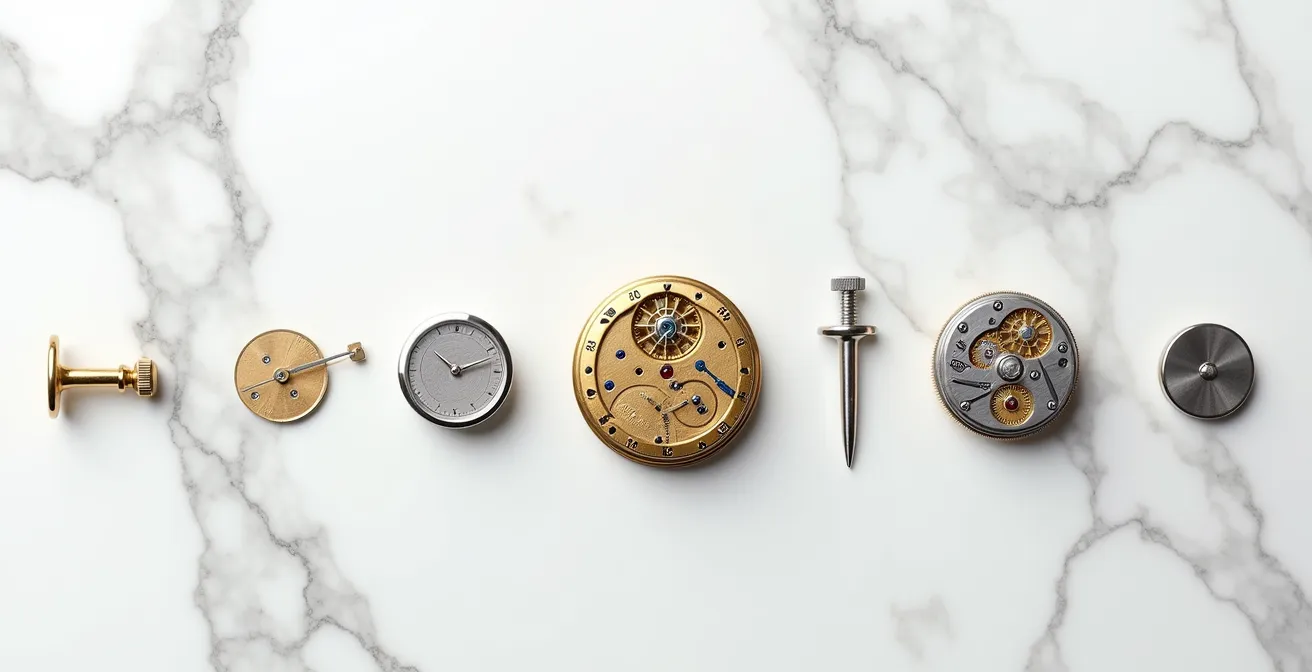
The psychological impact of breaking this luxury barrier proves profound. When you’ve personally adjusted a balance wheel to within seconds-per-day accuracy, you develop visceral understanding of what true precision means. This experience permanently recalibrates your baseline expectations for quality in everything you subsequently encounter—from the smartphone in your pocket to the education you’re receiving.
Students report a fascinating shift in how they evaluate objects and experiences post-workshop. Suddenly, they notice craftsmanship details invisible before. Marketing claims about “premium quality” provoke skepticism informed by hands-on knowledge of what excellence actually requires. The recalibration isn’t snobbery—it’s informed discernment born from direct experience with uncompromising standards.
This matters because aspirations shape trajectories. Students who’ve only experienced mass-market mediocrity naturally calibrate their own work to those standards. Brief exposure to world-class craftsmanship expands the definition of possible. It whispers: “You can aim here. This level of excellence isn’t reserved for others.” The democratization of access, even temporarily, becomes a lever for elevated ambition.
Crucially, this works without requiring ownership. You don’t need to afford a fifty-thousand-dollar watch to internalize its lessons about precision, aesthetics, and uncompromising standards. The workshop provides borrowed access to excellence, and the standards absorbed during that borrowing become permanently yours. For students building reference points that will guide decades of work, this experiential education in what excellence feels like proves invaluable.
Analog Precision as Digital-Era Currency
Job markets saturate with digital competencies. Every resume lists Python, Photoshop, Excel mastery. Coding bootcamps churn out thousands of graduates annually. Artificial intelligence now replicates many digital skills with unsettling proficiency. In this context, manual dexterity becomes paradoxically scarce—and therefore valuable.
The economics of scarcity explain why fine motor skills command disproportionate attention. When ninety percent of your competition can only manipulate keyboards and touchscreens, the ability to assemble microscopic mechanical components signals something rare. It demonstrates patience, spatial reasoning, and hand-eye coordination that no amount of screen time develops. Employers notice this differentiation immediately.
Interview conversations reveal where this advantage manifests concretely. Generic “passion projects” blur together—another student who “loves photography” or “enjoys coding in spare time.” But discussing micromechanics cuts through the noise. Explaining how you calibrated a hairspring or debugged a non-functioning escapement wheel demonstrates rigorous thinking, systematic troubleshooting, and commitment to mastering legitimately difficult skills. The conversation becomes memorable because the competency itself is unusual.
The analog advantage intensifies as artificial intelligence penetrates knowledge work. ChatGPT can write essays, generate code, analyze data. It cannot assemble a watch movement. Physical creation remains stubbornly resistant to automation. Watchmaking thus signals a relationship with craft that digital mastery cannot replicate—you’ve proven capacity for work that machines cannot (yet) do.
This extends beyond watchmaking specifically to what the skill represents: comfort with physical systems, tolerance for painstaking precision, and aesthetic sensibility about mechanical elegance. These qualities transfer to product design, engineering, quality control, and numerous fields where digital competencies alone prove insufficient. The student who can navigate both digital and analog domains possesses versatility increasingly rare in specialized education systems.
Professional networks recognize this rarity. Watchmaking communities remain relatively small, creating opportunities for meaningful connections with master craftspeople, collectors, and industry professionals. For students considering options to explore studying abroad or unconventional career paths, these networks open doors unavailable through conventional academic channels. The analog skill becomes social currency as much as professional competency.
From Mindless Buyer to Conscious Creator
Consumer culture thrives on opacity. Products arrive fully formed, their internal workings mysterious black boxes. When something breaks, you replace rather than repair. This cycle keeps consumption flowing but leaves students disconnected from material reality—passive buyers rather than active makers.
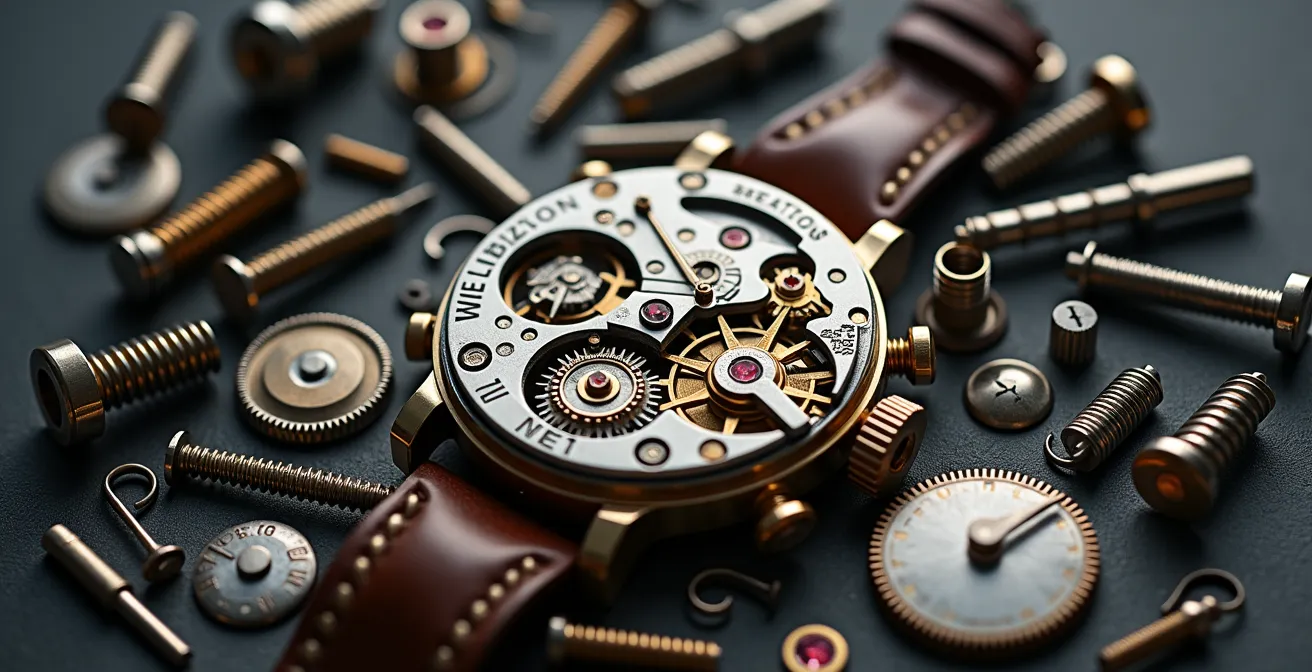
Watchmaking shatters this passivity by revealing internal complexity. Once you’ve assembled a movement component by component, you cannot look at manufactured objects the same way. Every product prompts questions: How was this made? Could it be repaired? What shortcuts did the manufacturer take? The “could I make or repair this?” lens fundamentally transforms purchasing behavior.
Students report concrete shifts in consumption patterns post-workshop. Impulse buying diminishes because each purchase triggers mental calculations about construction quality, repairability, and actual value versus marketing hype. The fast-fashion cycle that dominates student wardrobes suddenly feels wasteful when you’ve invested hours understanding how quality construction differs from disposable manufacturing.
This develops into what might be called an anti-obsolescence mindset. Planned obsolescence—designing products to fail—becomes personally offensive once you understand how unnecessary it is. Workshop participants begin seeking repairable items, learning maintenance skills, and questioning the replacement mentality that defines modern consumption. These attitudes extend far beyond watches to phones, clothes, furniture, and relationships with material possessions generally.
The philosophical transformation runs deeper than purchasing habits. Calculating value shifts from price tags to labor hours. When you’ve spent eight hours assembling a single movement, you develop intuitive understanding of what human skill and time actually cost. This reframes budget-conscious student thinking from “finding the cheapest option” to “identifying where quality justifies investment.”
Repair culture becomes personal rather than abstract. The environmental arguments for fixing rather than replacing carry more weight when you’ve personally experienced the satisfaction of making something work again. Students who’ve successfully troubleshot non-functioning watch movements develop confidence tackling other repairs—from smartphone screen replacements to clothing alterations. The maker identity established in watchmaking workshops radiates outward into broader self-sufficiency.
This consciousness about creation and consumption represents perhaps the most durable transformation. Long after workshop techniques fade from muscle memory, the fundamental shift from passive consumer to conscious creator persists. It influences career choices, lifestyle decisions, and how students relate to the material world. The workshop thus functions as catalyst for philosophical change that extends well beyond horology into how one navigates existence in a throwaway culture.
Key Takeaways
- Intentional slowness in precision work neurologically rebuilds attention spans, creating sustained focus capacity transferable to all demanding cognitive tasks
- Tangible mastery constructs maker identity independent of institutional validation, providing lasting achievements that outlive ephemeral academic credentials
- Temporary access to excellence permanently recalibrates quality standards and expands aspirational possibilities without requiring ownership
- Manual dexterity becomes scarce professional currency as digital skills commoditize and AI automates knowledge work
- Understanding creation transforms consumption behavior, developing anti-obsolescence consciousness and repair-oriented material relationships that persist long-term
Conclusion
The student experience increasingly resembles acceleration toward uncertain destinations—faster lectures, compressed semesters, relentless optimization of every moment. This velocity promises efficiency but delivers fragmentation, anxiety, and hollow achievement measured in vanishing grades. The tangible world offers an alternative paradigm.
Watchmaking workshops represent more than skill acquisition or novel experiences. They function as neurological intervention, identity reconstruction, and philosophical reorientation. From rebuilding fractured attention to accessing worlds of excellence, from developing rare professional competencies to transforming relationships with creation and consumption, these workshops catalyze changes that ripple through students’ lives far beyond the workbench.
The counterintuitive power of slowing down, of working with hands on microscopic components that demand complete presence, reveals what digital frenzy obscures: mastery requires time, identity emerges through creation, and value comes from understanding rather than merely consuming. These aren’t nostalgic rejections of modernity but essential counterbalances to its excesses.
For students seeking experiences that genuinely transform rather than merely credentialize, that build capacity rather than just fill resumes, watchmaking workshops deserve serious consideration. The bucket list shouldn’t contain only exciting destinations and adrenaline activities. It should include experiences that reconstruct how you think, work, and relate to the world. Few activities accomplish this as profoundly as learning to give mechanical life to dozens of tiny components through patient, precise, intentional slowness.
Frequently Asked Questions about Watchmaking Workshops
Do I need prior mechanical experience to attend watchmaking workshops?
No prior experience is required. Most beginner watchmaking workshops are designed for complete novices and start with fundamental concepts like identifying components and basic tool handling. The skills are taught progressively, building from simple assembly tasks to more complex procedures. Manual dexterity develops through practice during the course itself.
How much time commitment do watchmaking workshops typically require?
Workshop formats vary considerably. Intensive weekend courses might require 12-16 hours over two days, while semester-long programs involve several hours weekly for multiple months. Remote learning options offer more flexibility, allowing students to work at their own pace. Most beginner courses fall in the 20-40 hour range total, making them manageable alongside academic schedules.
Are watchmaking workshops expensive for students on limited budgets?
Costs range widely based on program type and duration. Introductory workshops can start around a few hundred dollars, while comprehensive professional training programs cost significantly more. However, many courses include tool and material costs, eliminating need for upfront equipment investment. Some institutions offer student discounts or payment plans, making workshops more accessible than haute horlogerie pricing might suggest.
Can watchmaking skills actually help with career prospects outside horology?
Absolutely. The precision, patience, and systematic problem-solving developed through watchmaking transfer to engineering, product design, quality control, and any field requiring fine motor skills and attention to detail. The rarity of manual dexterity in digital-focused job markets makes these competencies distinctive on resumes and memorable in interviews, even when pursuing careers entirely unrelated to watches.